 ebba.ossiannilsson
Nordplus partner meeting for the project "A Lifetime of Learning" NPAD-2025/10300, Helsinki, Finland, on February 12, 2026.
The third partner meeting (second onsite) for the Nordplus project "A Lifetime of Learning" NPAD-2025/10300 was held onsite in Helsinki, Finland, on February 12, 2026.

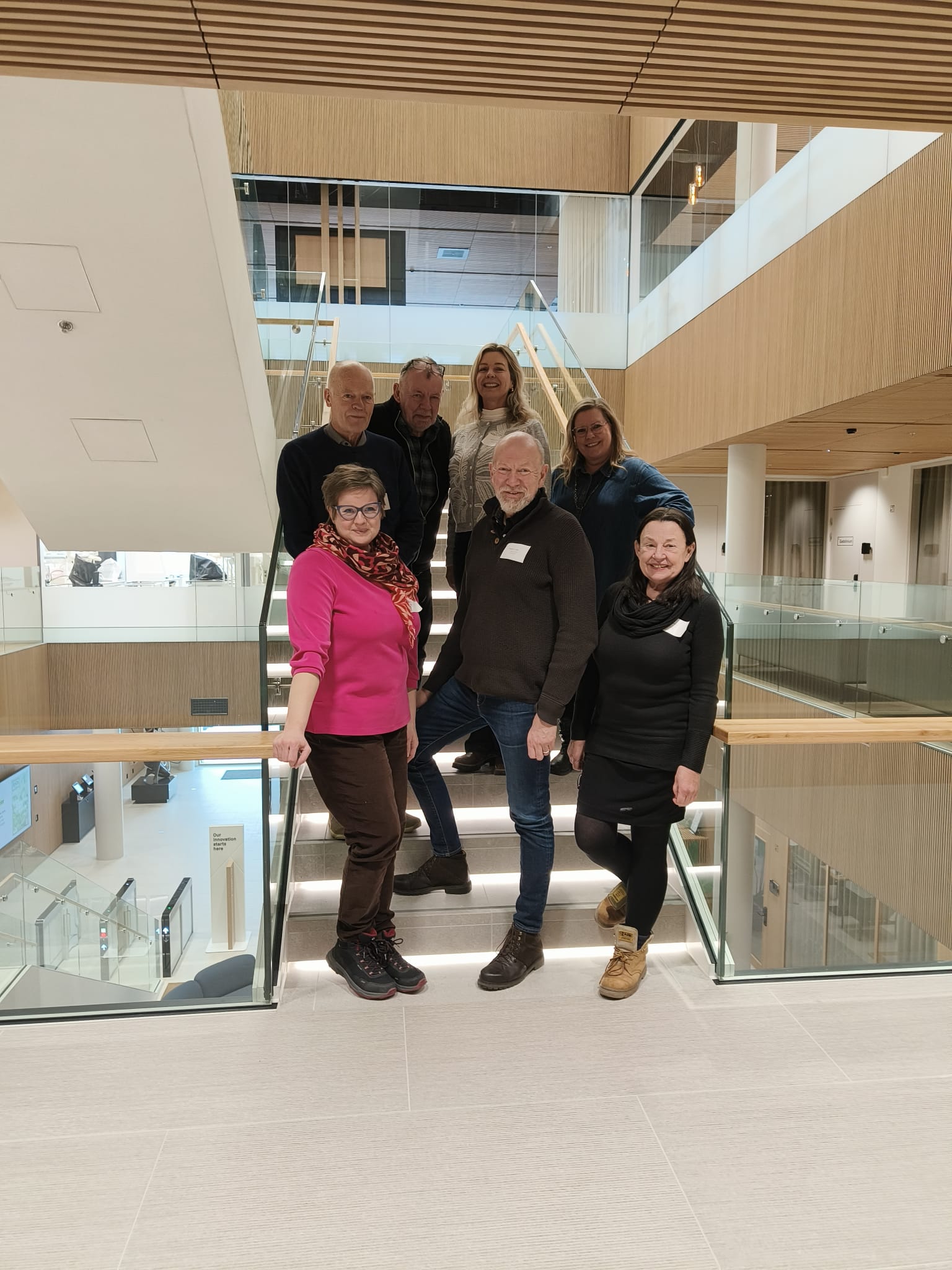
10:00 Coffee, opening and meeting objectives
Short SUMMARY of the project
This project brings together partners from Denmark, Finland, Iceland, Norway, and Sweden to map learning methodologies in workplace settings, focusing on the healthcare and technology sectors. By identifying and analyzing real-world cases, the project aims to document how skills are developed in work environments—both through partnerships with educational institutions and via internal training developed by the organisation itself. The findings will provide insights into best practices, trends, and effective learning methods that can be adopted across the Nordic region. The project is relevant given current pressing challenges such as labour and skills shortages caused by aging populations and rapidly evolving job requirements. By exploring work-based learning models, the project seeks to document workforce adaptability and productivity and share this knowledge. Through structured interviews, workshops, and conferences, the team
will collect and compare data across the five countries. Results will be disseminated through webinars, reports, and a final publication, ensuring that findings are accessible to policymakers, businesses, and educational institutions.
Background
The Nordic countries face challenges due to ageing populations, declining birth rates and shortages of both labour and competencies. Upskilling and re-skilling workers through workplace learning is crucial to retaining talent, increasing productivity, and filling skills gaps. The need for lifelong learning (skills, knowledge, and attitudes) is prevalent in the healthcare and technology sectors. These two sectors are experiencing labour and skills shortages across the Nordics and internationally. Therefore, maintaining productive workplaces and simultaneously ensuring quality skills development is essential. Learning and competence development in the workplace can no longer be something that only big multinational workplaces invest in.
In the technology sector, changes happen faster than skills can be developed. In healthcare, we do not have enough personnel to cover the population's needs. We, however, believe that training, suitable methods for competence development, and education are keys to addressing these challenges. Ensuring that suitable methods for work-based learning are of high quality, effective and integrated will ensure that employees can gain the skills necessary while remaining productive.
Nordic/Baltic added value
This project builds on the NordPlus priority of lifelong learning and the tradition of Nordic cooperation projects, enabling cross-border learning and the exchange of practice.
NPAD-2025/10300 Submitted - 03-Feb-2025
The countries in this project have, to a high degree, similar societal structures and face similar labour and skills shortages. There are also similarities in political and societal dialogue around the need for lifelong learning and how significant the workplace is as a learning arena. There is also extensive pre-existing cross-border business and cooperation. Our previous experiences show that the Nordic countries have such close relations, both formal and informal, that it is possible to identify trends in work-based learning and training that are relevant across country borders.
Defining effective and sustainable learning methods in the workplace, with quality as a central factor, will facilitate a transnational exchange of experiences, promising practices, and valuable knowledge.
Activities
The project team will have five physical working meetings during the project's lifetime. At each meeting, the partners will coordinate the mapping and analysis of findings. Whenever we have the first intermediate results from our investigations, expectedly after three months, we will arrange workshops or conferences directly connected to the meetings to disseminate the results and create a dialogue (quality control) concerning the identified experiences with key stakeholders that we identify during the scoping phase of the project.
Webinars will be arranged between the meetings to broaden the dialogue about the learning methods and discuss the project experiences. Before, during, and after the meetings and seminars, partners’ experiences from previous Nordic projects and collected experience will be incorporated into the project website, containing the Nordic network for Lifelong Learning (NLL) webpage blogs, descriptions, analyses, and the final publication. For the preparation and marketing of the seminars, 8 -10 webinars will be held and recorded, thus allowing asynchronous access to the material, projects, and experiences
Share this
Blog archive
-
2026(14 articles)
- September 2026 (1 article)
- August 2026 (1 article)
- July 2026 (4 articles)
- June 2026 (3 articles)
- March 2026 (1 article)
- February 2026 (1 article)
- January 2026 (3 articles)
-
2025(4 articles)
- October 2025 (2 articles)
- September 2025 (1 article)
- January 2025 (1 article)
-
2024(5 articles)
- December 2024 (1 article)
- September 2024 (2 articles)
- June 2024 (1 article)
- February 2024 (1 article)
-
2023(12 articles)
- November 2023 (1 article)
- October 2023 (2 articles)
- May 2023 (1 article)
- April 2023 (4 articles)
- March 2023 (4 articles)
-
2022(18 articles)
- November 2022 (7 articles)
- September 2022 (1 article)
- August 2022 (1 article)
- July 2022 (2 articles)
- April 2022 (1 article)
- March 2022 (2 articles)
- February 2022 (3 articles)
- January 2022 (1 article)
-
2021(14 articles)
- December 2021 (10 articles)
- May 2021 (3 articles)
- February 2021 (1 article)
-
2020(25 articles)
- December 2020 (4 articles)
- July 2020 (4 articles)
- June 2020 (3 articles)
- May 2020 (4 articles)
- April 2020 (2 articles)
- March 2020 (4 articles)
- February 2020 (1 article)
- January 2020 (3 articles)
-
2019(29 articles)
- November 2019 (2 articles)
- October 2019 (1 article)
- July 2019 (2 articles)
- June 2019 (2 articles)
- April 2019 (2 articles)
- March 2019 (2 articles)
- February 2019 (3 articles)
- January 2019 (15 articles)
-
2018(29 articles)
- December 2018 (4 articles)
- November 2018 (6 articles)
- October 2018 (3 articles)
- June 2018 (3 articles)
- May 2018 (1 article)
- April 2018 (2 articles)
- March 2018 (3 articles)
- February 2018 (4 articles)
- January 2018 (3 articles)
-
2017(12 articles)
- December 2017 (4 articles)
- November 2017 (7 articles)
- October 2017 (1 article)